Friendship Day Activity Ideas for a Family Get-Together
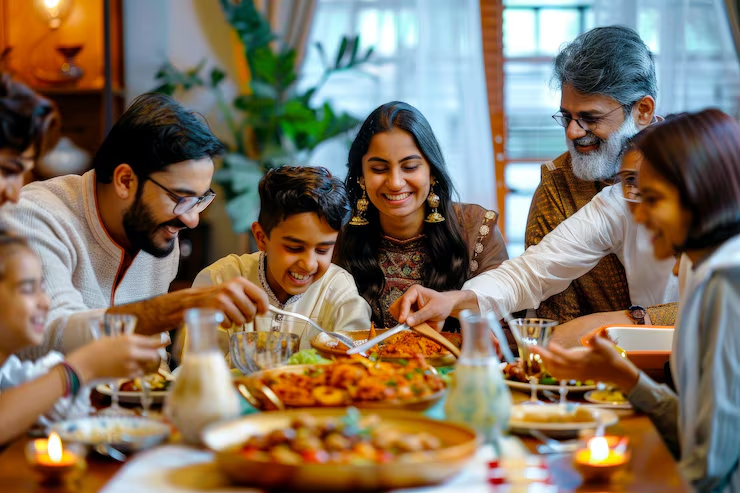
Quick answer: Good Friendship Day activities for a family get-together include a simple friendship band-making station, a shared outdoor game mixing kids and adults, a collaborative cooking or baking project, and a group storytelling circle. Activities that involve both kids and adults together tend to work better than ones designed for kids alone at a mixed family gathering. Our first attempt at hosting a small Friendship Day get-together for a few families was genuinely chaotic, with kids running in one direction and adults chatting separately in another, no real shared activity actually bringing the whole group together.
It took some real trial and error afterward to find activities that genuinely worked for a mixed group of different ages, rather than just hoping everyone would naturally organize themselves into some coherent, connected activity.
What I Tried First (and Why It Didn’t Work)
We initially just set out some craft supplies and snacks and assumed the gathering would organize itself naturally, which mostly resulted in the kids scattering to separate corners with their own small groups while the adults ended up having a fairly separate conversation entirely disconnected from what the kids were doing.
This wasn’t a disaster exactly, but it didn’t feel like the kind of shared, connected celebration I’d actually hoped for, and by the end, it felt more like several separate small gatherings happening in the same room than one genuine group event.
Activities That Actually Brought Everyone Together
A simple friendship band-making station, set up with supplies for both kids and adults, turned out to genuinely mix ages, since several parents ended up making bands alongside the kids rather than just supervising from a distance, similar to how our craft ideas for DIY friendship bands work well as a shared activity, not just a kids-only one.
A collaborative baking project, where different families each contributed a step to one shared dish, gave everyone, kids and adults, a genuine, connected task rather than separate parallel activities happening in the same space.
What We’d Do Differently Next Time
We’ve learned to plan at least one activity specifically designed to mix ages deliberately, rather than assuming a shared space alone would naturally produce a shared experience, since without that deliberate structure, groups tend to naturally separate by age regardless of good intentions.
A group storytelling circle, where each person, kid or adult, adds one line to a collaborative story, has become a genuine favorite since our first attempt, since it requires everyone’s actual participation and produces something the whole group made together, which the earlier, more passive gathering never quite achieved.
| Before | After |
| Assumed the gathering would organize itself | Planned at least one deliberately mixed-age activity |
| Kids and adults in separate groups | A shared friendship band station for all ages |
| No connected, shared task | A collaborative baking project everyone contributed to |
| Passive, scattered activity | A group storytelling circle requiring everyone’s participation |
If you only remember one thing:
Planning at least one activity deliberately designed to mix kids and adults together, rather than assuming a shared physical space will naturally produce a shared experience, is what actually turned our Friendship Day gathering into something that felt genuinely connected rather than several separate small events happening in the same room.
Related Reading on PlayAndGrow
our Friendship Day craft ideas for DIY friendship bands
Friendship Day games for the classroom, adaptable for home too
how to plan a simple family game tournament at home
50 family bonding activities
Quick Answers
What activities work well for a mixed-age Friendship Day gathering?
A shared friendship band-making station, a collaborative baking project, and a group storytelling circle all genuinely involve both kids and adults together, rather than naturally separating the group by age.
How can I avoid a Friendship Day gathering feeling chaotic or disconnected?
Planning at least one deliberately structured, mixed-age activity, rather than assuming the group will naturally organize itself, tends to produce a far more genuinely connected event.
Is a collaborative cooking project a good group activity?
Yes, having different people or families each contribute one step to a shared dish gives everyone a genuine, connected task, working well for a mixed group of ages at a family gathering.