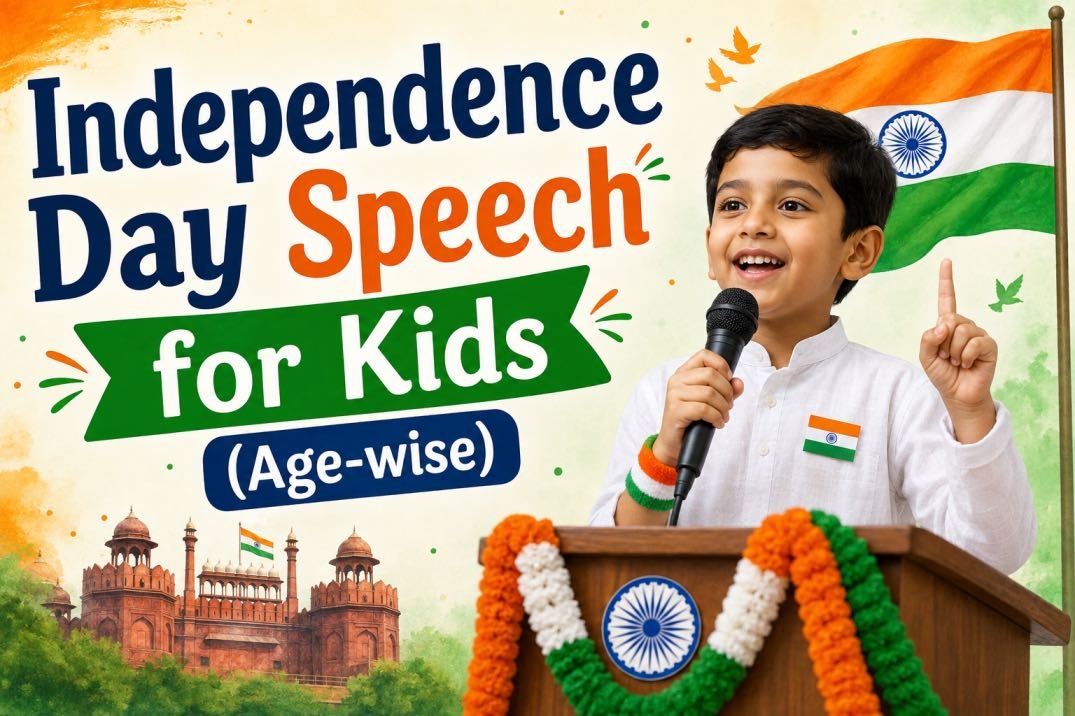
Independence Day Speech for Kids (Age-wise)
My son’s first Independence Day speech attempt, at around age six, was essentially a memorized paragraph copied from somewhere online, full of words he didn’t actually understand, and he stumbled through it looking visibly confused about what he was even saying. It taught me that an age-appropriate speech matters far more than an impressively worded one that a child doesn’t genuinely grasp.
Here’s an Independence Day speech for kids, age-wise, built to match what a child can actually understand and deliver with genuine confidence at each stage.
| Quick Answer: An Independence Day speech for kids should be matched to their age: a few simple lines about the flag and freedom for nursery-age children, a short explanation of independence and gratitude for early primary, and a fuller reflection on freedom, responsibility, and national pride for older students in middle and high school. Keeping language age-appropriate matters more than covering every historical detail. |
Why Age-Appropriate Language Matters More Than Polish
A speech full of words and concepts beyond a child’s actual understanding tends to be delivered flatly, without real feeling, simply because the child doesn’t genuinely grasp what they’re saying. Matching both vocabulary and content depth to actual age and comprehension produces a speech that a child can deliver with real, visible confidence, even if it’s simpler than an adult-written version might be.
Speech Samples by Age Group
Nursery to Class 2
“Today is Independence Day. Our flag has three colors, orange, white, and green. India is free, and we are proud to be Indian. Jai Hind!” — short, simple, and centered on concrete, visible symbols like the flag rather than abstract historical concepts.
Class 3-6
“Independence Day reminds us of the freedom our country gained after many years of struggle. Brave freedom fighters worked hard so that we could live freely today. On this day, we remember them and promise to be good citizens who make our country proud.”
Class 7-10
“Independence Day is not just a date on the calendar, it’s a reminder of the sacrifices made so that we could live in a free nation. Freedom comes with responsibility, to respect our country, to work toward its progress, and to value the diversity that makes India what it is. As young citizens, we carry forward the dreams of those who fought for this freedom.”
Practical Tips
- Choose language and concepts genuinely matched to your child’s current age and understanding, not an impressive-sounding version copied from elsewhere.
- Practice with a calm, natural pace rather than rushing through memorized lines.
- Let younger kids focus on simple, concrete ideas like the flag and the word ‘freedom’ rather than detailed historical events.
- Encourage older kids to add a genuine personal reflection, which tends to make the speech feel more authentic than a purely factual recitation.
Key Takeaways
- An age-appropriate speech, delivered with genuine understanding, holds an audience’s attention better than an impressively worded one a child doesn’t fully grasp.
- Younger kids do best with short, concrete language centered on visible symbols like the flag.
- Older kids can handle fuller reflection on freedom, responsibility, and national identity.
- Practicing at a natural, calm pace matters more than memorizing quickly under pressure.
Conclusion
A good Independence Day speech doesn’t need to impress with big words, it needs to match what a child genuinely understands and can deliver with real confidence. Choose the version suited to your child’s actual age, and let them practice it enough times that the words feel like their own by the time they stand up to speak.
Related Reading on PlayAndGrow
Our Independence Day tricolor craft ideas and fancy dress tips
How to help your child prepare a speech for a school event
FAQs
What should a nursery-level Independence Day speech include?
Simple, concrete language focused on visible symbols like the tricolor flag and a basic sense of pride works best, kept to just a few short lines.
How long should an Independence Day speech be for a middle school student?
Around six to ten lines, touching on freedom fighters, gratitude, and the idea of being a responsible citizen, tends to suit this age group well without becoming overwhelming to memorize.
Should older students add personal reflection to their speech?
Yes, encouraging older students to include a genuine personal thought about what freedom or national pride means to them tends to make the speech feel more authentic than a purely factual recitation.


5 Comments
Comments are closed.