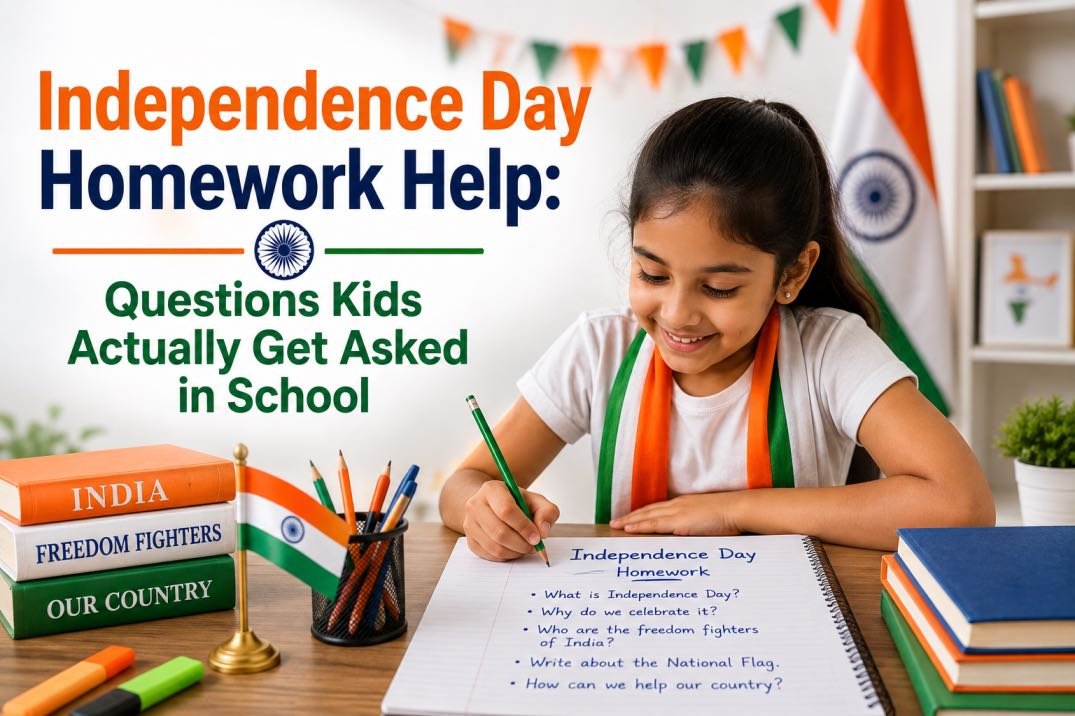
Independence Day Homework Help: Questions Kids Actually Get Asked in School
Quick answer: Common Independence Day homework questions include when India became independent, who the first Prime Minister was, why the tricolor has its specific colors, and what the Ashoka Chakra represents. Here are simple, accurate answers for each, kept short enough for a child to actually use and remember.
The Questions That Come Up Most Often
“When did India become independent?” — August 15, 1947. “Who was India’s first Prime Minister?” — Jawaharlal Nehru. “What do the colors of the flag mean?” — Saffron represents courage and sacrifice, white represents truth and peace, and green represents growth and prosperity.
“What is the Ashoka Chakra?” — The wheel in the center of the flag, with 24 spokes, represents the eternal wheel of law and progress, and is based on a symbol from the Ashoka Pillar. “Who designed the Indian flag?” — Pingali Venkayya designed the original tricolor flag.
How to Help Without Just Giving the Answer
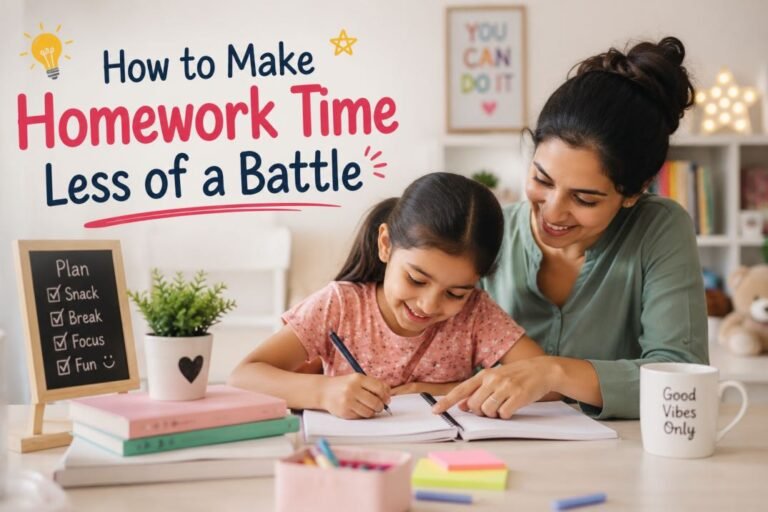
Reading the question together first, then helping a child find or recall the answer themselves, tends to build more genuine understanding than simply supplying facts to copy down. For a young child, saying the answer aloud together a couple of times before they write it down helps it actually stick, rather than just being copied mechanically.
For older kids, encouraging a follow-up question, like why the specific colors were chosen rather than others, can turn a basic homework fact into a slightly deeper, more genuinely engaged conversation.
Parent Tip
Parent Tip: Rather than just supplying an answer to copy, ask your child to explain it back to you in their own words afterward. This small step tends to reveal whether they’ve actually understood the fact or just transcribed it.
Quick Comparison
| Common Question | Simple Answer |
| When did India become independent? | August 15, 1947 |
| Who was India’s first Prime Minister? | Jawaharlal Nehru |
| What do the flag’s colors mean? | Saffron: courage; White: truth/peace; Green: growth/prosperity |
| Who designed the Indian flag? | Pingali Venkayya |
Practical Tips
- Read homework questions together and help your child find or recall answers themselves, rather than just supplying facts.
- Have younger kids say an answer aloud a couple of times before writing it down, so it genuinely sticks.
- Encourage older kids to ask a follow-up question for slightly deeper engagement with a basic fact.
- Double-check any fact against a reliable source if you’re not fully certain, rather than guessing.
Common Mistakes to Avoid
- Simply supplying answers for a child to copy without any genuine understanding.
- Rushing through homework help without checking whether a child actually grasps what they’ve written down.
- Providing inaccurate or half-remembered facts instead of verifying them first.
The Short Version
Independence Day homework tends to repeat the same handful of core questions each year, when India became independent, who the first Prime Minister was, what the flag’s colors mean, and having simple, accurate answers ready, paired with genuinely helping a child understand rather than just copy them, makes homework time smoother and more meaningful.
Related Reading on PlayAndGrow
Our Independence Day speech guide for kids, age-wise
What my son actually asked me about freedom
Our Independence Day fancy dress ideas for kids
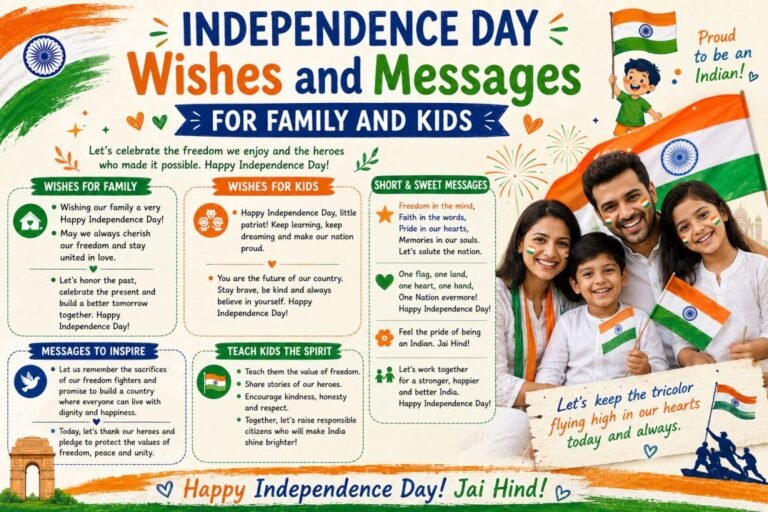
Our Independence Day wishes and messages for family and kids
FAQs
When did India become independent?
India became independent on August 15, 1947.
Who was India’s first Prime Minister?
Jawaharlal Nehru was India’s first Prime Minister.
What do the colors of the Indian flag represent?
Saffron represents courage and sacrifice, white represents truth and peace, and green represents growth and prosperity.
Who designed the Indian national flag?
Pingali Venkayya designed the original tricolor that became the basis for India’s national flag.


2 Comments
Comments are closed.