
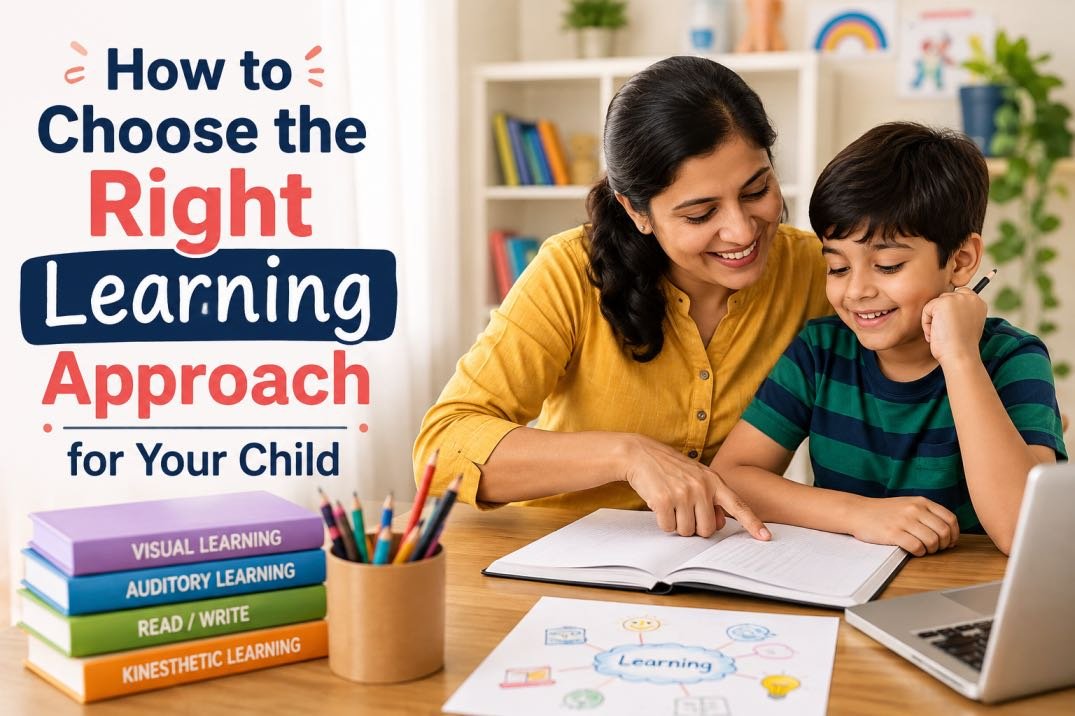
How to Choose the Right Learning Approach for Your Child
For a while, I tried to help both my kids study the exact same way, mostly because it was simpler for me to manage one consistent system rather than two different approaches, and it took a fair bit of frustration before I realized that approach was actively working against my son specifically, who needed something quite different from what worked smoothly for his sister.
It wasn’t until I actually paid closer attention to how each of them naturally engaged with new information, rather than assuming a one-size-fits-all system would work equally well, that studying at home stopped being a daily point of tension for at least one of them.
What I Tried First (and Why It Didn’t Work)
My daughter responded well to quiet, independent reading and written notes, so I assumed the same approach, just adjusted slightly for age, would work for my son too, and kept pushing him toward the same quiet, seated, reading-and-writing-heavy study sessions for longer than I probably should have.
He resisted almost every single session, not because the material was too hard, but because sitting still and absorbing information purely through reading and writing genuinely didn’t suit how he engaged with new information, something that became obvious only once I started paying real attention rather than assuming his resistance was just typical reluctance.
Actually Observing, Not Assuming
Once I started watching more carefully rather than assuming, it became clear my son retained information far better when he could move while learning, talk through concepts out loud, or physically manipulate something related to what he was studying, compared to sitting quietly with a book or worksheet. This wasn’t a dramatic realization, more a gradual accumulation of small observations, like noticing he explained multiplication concepts more confidently after we’d built physical arrays with blocks than after any amount of written practice alone.
I also noticed he genuinely needed more frequent breaks and movement built into any study session, not because he lacked discipline, but because sitting still for extended periods seemed to actively interfere with his ability to actually absorb what he was working on, regardless of how interesting the material itself was.
Adjusting the Approach, Not Just the Content
We shifted his study sessions to include far more movement and verbal explanation, letting him pace while reciting facts, use physical objects to represent math problems, and take a short movement break every fifteen minutes or so rather than pushing through a longer, seated block. The actual content he needed to learn didn’t change, but how he engaged with it did, and the daily resistance dropped noticeably once the approach matched how he actually processed information.
This didn’t mean abandoning reading and writing altogether, since those remain genuinely important skills, but rather introducing new concepts through a more active, movement-friendly method first, before reinforcing them with more traditional written practice once the initial understanding was already in place.
| Before | After |
| Same study method for both kids | Approach adjusted to how each child actually learns |
| Assumed resistance meant poor discipline | Recognized resistance as a mismatch with his learning style |
| Long, seated study sessions | Shorter sessions with built-in movement breaks |
| Reading and writing as the primary method | Active, verbal, and physical methods introduced first |
If you only remember one thing:
Paying close attention to how a specific child actually engages with and retains new information, rather than assuming a study method that works for one child will automatically work for another, can be the difference between daily resistance and genuine, willing engagement with learning. The underlying material rarely needs to change — the delivery method often does.
Related Reading on PlayAndGrow
| Read Next | Link |
| how to help your child set realistic weekly goals for school | /how-to-help-your-child-set-realistic-weekly-goals-for-school |
| fun ways to practice multiplication tables at home for a hands-on example | /fun-ways-to-practice-multiplication-tables-at-home |
Quick Answers
How do I know which learning approach suits my child?
Watching closely for what actually holds their attention and leads to genuine retention, rather than assuming a method that worked for a sibling or that seems generally recommended, tends to reveal a lot over a few weeks of careful observation.
Should kids who learn better through movement still practice reading and writing?
Yes, reading and writing remain genuinely important skills regardless of a child’s preferred learning style, though introducing new concepts through a more active method first, before reinforcing with traditional practice, can ease overall resistance.
Can a child’s preferred learning approach change over time?
Yes, a child’s most effective learning style can shift as they grow and develop, so it’s worth periodically reassessing rather than assuming an approach that worked well at one age will continue working indefinitely.