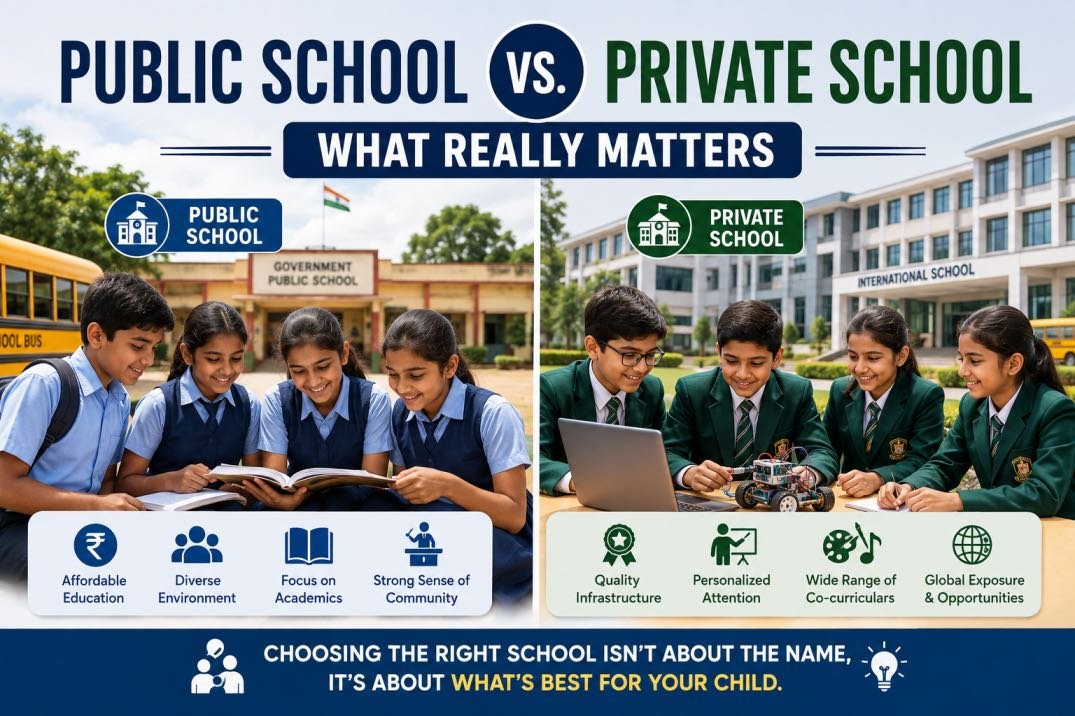
Public School vs. Private School: What Really Matters
Comparing public and private schools felt overwhelming at first, mostly because the comparison seemed to assume one category was uniformly better, when what we actually found while researching options was enormous variation within each category.
Here’s public school vs. private school, focused on the specific factors that genuinely mattered once we moved past the broad label and looked at individual schools themselves.
| Quick Answer: The public vs. private school decision genuinely depends less on the label itself and more on specific factors: class size, teacher-to-student ratio, the individual school’s culture and values fit, and your family’s actual financial capacity to sustain private school fees long-term without ongoing strain. A well-run public school can outperform a mediocre private one, and vice versa. |
Why the Label Matters Less Than Individual School Quality
A strong public school with dedicated teachers and reasonable class sizes can offer a genuinely better experience than an underperforming private school charging significant fees, and vice versa — the broad public/private category tells you far less than actually visiting and evaluating specific schools individually.
Factors Worth Actually Comparing
Class Size and Teacher Ratio
Smaller class sizes generally allow more individual attention, though this varies considerably within both public and private schools depending on the specific institution and location.
Financial Sustainability
Private school fees sustained comfortably matter more than fees that create ongoing financial strain, since that strain can affect the whole family’s wellbeing in ways that outweigh potential academic benefits.
Cultural and Values Fit
A school’s specific culture, whether it emphasizes competition, creativity, or a particular educational philosophy, matters as much as its public or private label for whether it genuinely suits your child.
Practical Tips
- Visit specific schools individually rather than relying on general public vs. private assumptions.
- Ask directly about actual class sizes and teacher-to-student ratios rather than accepting a general reputation.
- Honestly assess whether private school fees can be sustained comfortably without ongoing financial strain.
- Prioritize a school’s specific cultural and values fit for your child over the broad public or private category alone.
Key Takeaways
- Individual school quality varies enormously within both the public and private categories.
- Class size, teacher ratio, and financial sustainability matter more than the broad label itself.
- A school’s specific cultural and values fit affects a child’s experience as much as academic reputation.
- Visiting and evaluating specific schools directly reveals more than general assumptions about either category.
Conclusion
The public vs. private school decision benefits far more from evaluating specific, individual schools than from assuming one broad category is universally better. Focus on class size, financial sustainability, and cultural fit for the actual schools you’re considering, rather than the label alone.
Related Reading on PlayAndGrow
| Read Next | Link |
| how to help your child settle into a new school year | /how-to-help-your-child-settle-into-a-new-school-year |
| homeschooling vs. traditional schooling: what actually matters | /homeschooling-vs-traditional-schooling-what-actually-matters |
| how to build a good relationship with your child’s teacher | /how-to-build-a-good-relationship-with-your-childs-teacher |
| montessori vs. traditional preschool: what’s the real difference | /montessori-vs-traditional-preschool-whats-the-real-difference |
| how to help your child make friends in a new neighborhood | /how-to-help-your-child-make-friends-in-a-new-neighborhood |
FAQs
Is private school always academically better than public school?
Not necessarily — school quality varies significantly within both categories, and a strong public school can genuinely outperform an underperforming private one.
How much does class size actually matter?
Smaller class sizes generally allow more individual teacher attention, though this varies by specific school regardless of public or private status, making it worth checking directly rather than assuming based on category.
Should private school fees be a major factor in the decision?
Yes, fees that create ongoing financial strain can affect overall family wellbeing in ways that may outweigh potential academic benefits, so honest financial assessment matters as much as academic comparison.