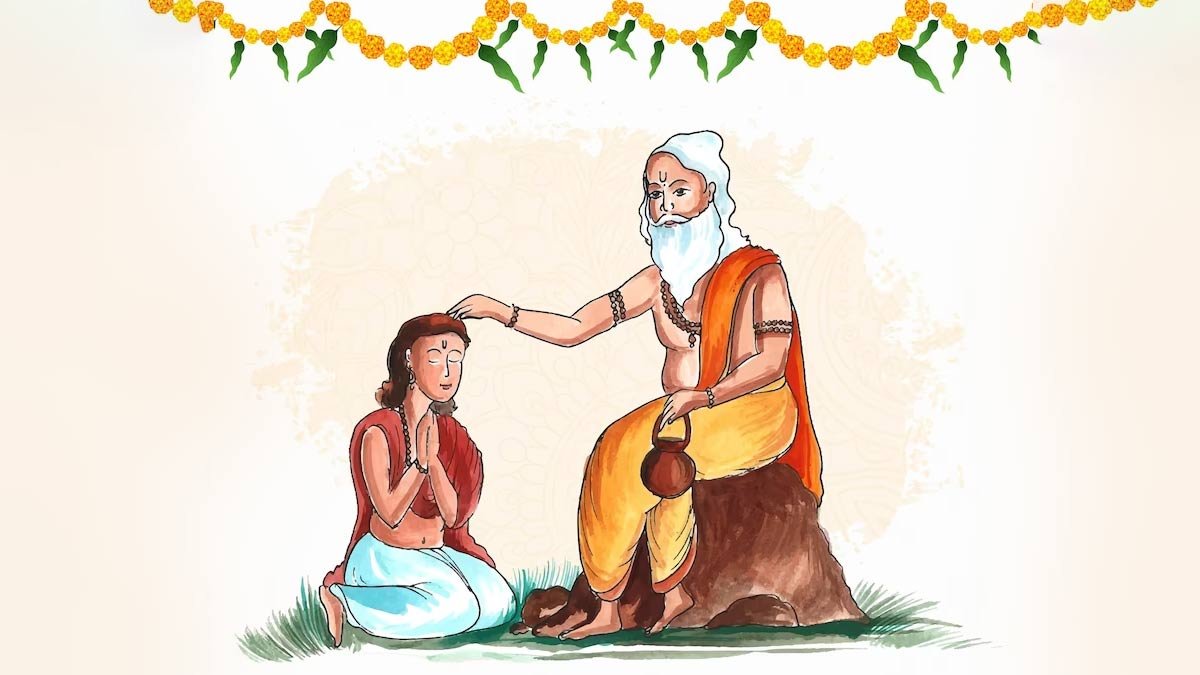
Guru Purnima Vrat Katha for Kids (Simplified)
Quick answer: The traditional Guru Purnima vrat katha centers on the sage Ved Vyasa, born on this day, who organized the vast body of Vedic knowledge into the four Vedas and composed the Mahabharata, and whose birth is honored through fasting, reflection, and gratitude toward one’s own teachers. Here’s a simplified version I’ve told my own kids, kept short enough to hold their attention while still carrying the story’s real meaning.
Long ago, a great sage named Ved Vyasa was born on the full moon day that we now celebrate as Guru Purnima. Even from a young age, he was known for extraordinary wisdom, and as he grew, he took on a task that seemed almost impossible: organizing the enormous, scattered body of ancient Vedic knowledge into a clear, structured form that future generations could actually learn from and understand.
Vyasa divided the Vedas into four distinct parts, wrote the great epic Mahabharata, and is remembered as one of the most important gurus in Indian tradition, not because he simply possessed knowledge, but because he took on the immense work of organizing and passing that knowledge forward so it wouldn’t be lost or remain inaccessible to those who came after him.
Why This Vrat Katha Focuses on Organizing Knowledge, Not Just Possessing It
What I emphasize when telling this story to my kids is that Vyasa’s greatness wasn’t just about being smart, it was about the deliberate, patient work of making that wisdom usable and accessible for others, which is really a beautiful way to describe what a good teacher does every single day in a classroom.
This framing helps my kids connect an ancient, somewhat abstract story to something concrete in their own lives, since their own teachers are, in a smaller but genuinely similar way, doing that same work of organizing and making knowledge accessible for them specifically.
How the Fasting and Observance Tradition Connects to the Story
Traditionally, some families observe a simple fast on Guru Purnima as a form of respect and reflection, tied to honoring Vyasa’s birth and the broader spirit of gratitude toward one’s own gurus, though the specific practices vary considerably by family and region.
With my kids, rather than focusing on the fasting practice itself, which isn’t something we’ve adopted as a family tradition, I’ve focused the conversation on the reflection and gratitude part, asking them to think of one teacher, in any part of their life, who has helped organize or explain something confusing into something they could actually understand, echoing what Vyasa did on a much larger scale.
| Story Element | What It Represents |
| Vyasa’s birth on the full moon | The origin of Guru Purnima’s observance |
| Organizing the Vedas into four parts | The value of making knowledge accessible, not just possessing it |
| Composing the Mahabharata | A lasting contribution to future generations |
| The tradition of reflection and gratitude | Honoring one’s own teachers in a smaller, personal way |
The Short Version
The Guru Purnima vrat katha, centered on the sage Vyasa’s work organizing the Vedas and composing the Mahabharata, teaches kids that a guru’s greatness lies not just in possessing wisdom but in the patient work of making it accessible to others, a lesson that connects meaningfully to the real teachers in a child’s own life.