
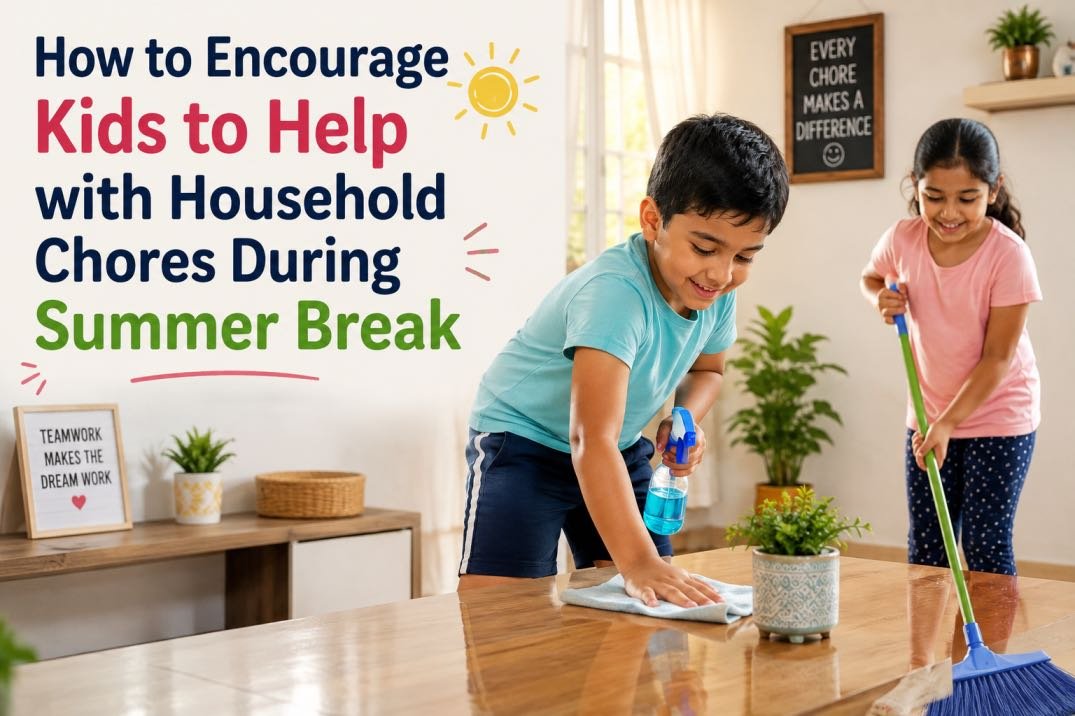
How to Encourage Kids to Help with Household Chores During Summer Break
The extra unstructured time that summer break brings always seemed like it should naturally translate into more household help from the kids, since they genuinely had more free hours available, but for the first couple of summers that assumption never actually played out in reality, and chores remained just as much a daily negotiation as during the busier school term.
It took a fairly deliberate shift in how we approached the whole idea, treating summer specifically as a window to build genuine habits rather than just hoping extra free time would organically translate into extra help, before things actually started to change. The third summer we tried this more intentional approach was noticeably different from the two before it, with both kids taking on regular tasks without nearly as much daily reminding as I’d grown to expect.
What made the real difference wasn’t a single dramatic conversation or a strict new chart system, but a handful of smaller, consistent adjustments to how chores were framed and structured throughout those first few weeks of the break, which then carried genuine momentum through the rest of the summer.
Starting the Summer with a Deliberate Reset
Rather than just letting the same loose, inconsistent chore expectations from the school term carry over unchanged, we used the first week of summer specifically to sit down together and reset expectations, discussing what tasks made sense for each child’s current age and actually agreeing on them together rather than announcing a list from the top down.
This deliberate reset moment mattered more than I expected, since it gave both kids a genuine sense that this was a fresh start with real input from them, rather than just an extension of chores they’d already been half-heartedly resisting during the school year.
Building the Habit Through the Actual Break
We tied specific chores to natural moments already happening during the day, tidying toys right before lunch, helping with dishes right after dinner, rather than leaving tasks as vague, undated obligations that were easy to keep postponing indefinitely throughout a long, unstructured day.
We also made a point of noticing and specifically naming when a chore happened without needing a reminder, which built a kind of positive momentum through the summer that made each subsequent week slightly easier than fighting the same battle from scratch every single day. By the final weeks of the break, several tasks had genuinely become automatic rather than something either of us needed to actively manage.
| School Term Approach | Summer Break Adjustment |
| Vague, inconsistent chore expectations | A deliberate reset with agreed, specific tasks |
| Chores as undated, easily postponed obligations | Tasks tied to specific daily moments |
| Reminders as the main tool | Noticing and naming chores done without a reminder |
| Same daily battle repeated | Building genuine momentum through consistency |
The Short Version
Using the first week of summer break specifically to reset chore expectations together, then tying tasks to natural existing daily moments rather than leaving them as vague obligations, built genuine, largely self-sustaining habits by the later weeks of the break. The extra free time summer offers doesn’t automatically translate into more help on its own — it needs a deliberate, if fairly small, structural push to actually turn into a lasting habit.
Related Reading on PlayAndGrow
How to build a simple weekly family routine that actually sticks
How to keep kids cool and safe during summer heat
Questions Other Parents Ask Me
How can I get my kids to help with chores during summer break?
Using the start of the break to deliberately reset expectations together, then tying specific chores to natural moments already happening in the day, tends to build far more consistent help than simply hoping extra free time will lead to more voluntary assistance.
Should chore expectations change during summer versus the school term?
A deliberate reset at the start of summer, discussing and agreeing on tasks together rather than just continuing the same loose school-term arrangement, tends to give kids a genuine fresh start and more real buy-in.
What if my child forgets their summer chores without reminders?
Tying each chore to a specific, already-existing daily moment, like right before lunch or right after dinner, provides a natural trigger that reduces reliance on active verbal reminders over time.





One Comment
Comments are closed.