
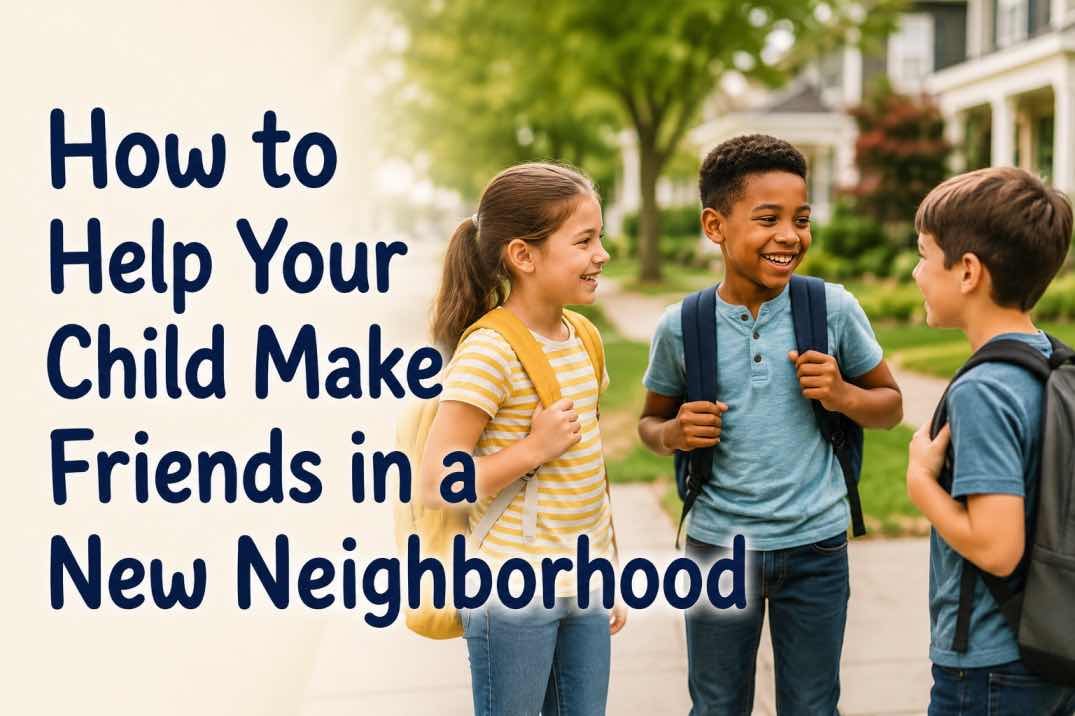
How to Help Your Child Make Friends in a New Neighborhood
My daughter’s first few months in a new neighborhood involved a lot of hovering near other kids without quite knowing how to actually start a friendship, and a few deliberate, small pushes from us made a genuine difference in how quickly she found her footing socially.
What Actually Helped
1. Create Low-Pressure Opportunities for Repeated Contact — Regularly visiting the same local park or playground at a similar time, rather than a single one-off outing, gave her repeated chances to encounter the same kids, since genuine friendships tend to build gradually through familiarity rather than instantly during a single interaction.
2. Introduce Yourself to Other Parents First — Making a point of briefly chatting with other parents at the park or a school event opened a natural door for the kids to interact too, and it meant I had a small existing connection to build on if I wanted to suggest an actual playdate later.
3. Suggest a Specific, Low-Stakes First Playdate — Rather than a vague ‘let’s get together sometime,’ proposing something concrete, a specific afternoon and a simple, defined activity, made an actual playdate meaningfully more likely to happen than a loose, open-ended suggestion that tends to get lost in busy schedules.
4. Get Involved in a Regular Local Activity — Enrolling her in a weekly local class or activity gave her a consistent, structured setting to see the same group of kids repeatedly, which built familiarity faster than purely informal, unpredictable neighborhood encounters alone.
5. Be Patient with the Timeline — Genuine friendships took longer to develop than either of us expected, several months rather than weeks, and lowering my own expectations about the pace helped me avoid projecting anxiety onto her about how quickly she ‘should’ be making friends.
| Strategy | Why It Helps |
| Repeated visits to the same local spot | Builds familiarity gradually, not instantly |
| Parent-to-parent introductions first | Opens a natural door for kids to connect too |
| Specific, concrete playdate proposals | More likely to actually happen than vague suggestions |
| A regular local activity or class | Consistent, repeated exposure to the same group of kids |
Fast Tips
- Visit the same local park or playground regularly, rather than a different spot each time, to build repeated familiarity with the same group of kids.
- Introduce yourself to other parents directly, since this often naturally opens the door for the kids to connect as well.
- Propose a specific playdate with a defined time and activity, rather than a vague, open-ended suggestion.
- Enroll your child in a consistent local activity or class for regular, repeated exposure to the same peer group.
- Expect the process to take genuinely longer than feels comfortable, often several months, and try not to project that timeline pressure onto your child.
How long does it typically take a child to make friends after moving?
This varies considerably by child and circumstance, but genuine friendships often take several months to develop, particularly through repeated, low-pressure contact rather than happening quickly after a single interaction.
Should I arrange playdates for my child in a new neighborhood?
Proposing a specific, concrete playdate, with a defined time and simple activity, tends to be considerably more effective than a vague suggestion, and can be a genuinely useful way to help build a new friendship along.
How can I help my child meet other kids in a new area?
Visiting the same local park or playground regularly, introducing yourself to other parents, and enrolling your child in a consistent local activity all provide repeated opportunities for familiarity to build naturally over time.




2 Comments