The Sunday We Let the Kids Plan the Whole Day
Quick answer: Letting our kids plan an entire Sunday themselves, with minimal adult veto power, resulted in a slightly chaotic but genuinely joyful day that taught them real lessons about planning, compromise between siblings, and realistic expectations, lessons that a parent-led day probably wouldn’t have taught nearly as directly. The idea came from my daughter, half-joking, asking why the grown-ups always got to decide what the family did on weekends, a fair question that led to an actual experiment the following Sunday.
We set just two ground rules, nothing unsafe and nothing requiring money we hadn’t budgeted for, and otherwise handed the two kids full control of the schedule, including negotiating between their fairly different preferences for how to spend the day.
The morning planning session alone was genuinely revealing, watching my son push hard for an all-day video game marathon while my daughter countered with a full outdoor itinerary, and the negotiation between the two of them, which we deliberately stayed out of, taught them something about compromise that no lecture from us would have landed nearly as well.
What They Actually Chose, and Why It Mattered
They eventually settled on a compromise day, a morning bike ride, a self-made lunch (which was messier and took longer than either of us would have planned), and an afternoon of video games, a mix that neither of them would have chosen entirely on their own, but that they’d both genuinely agreed to.
Watching them plan the self-made lunch specifically was a small window into how they think about time and effort, they’d underestimated how long making sandwiches for four people would actually take, and I resisted the urge to intervene, letting them work through the resulting time crunch themselves rather than rescuing the schedule.
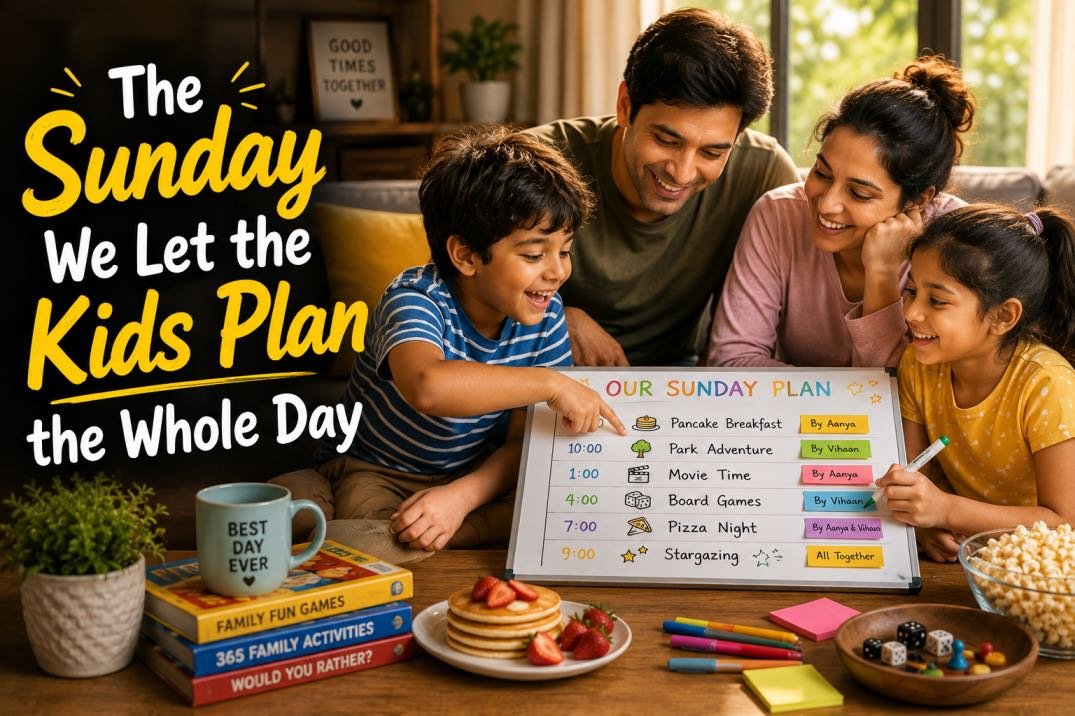
By early afternoon, both kids seemed genuinely proud of the plan they’d made, checking things off a small handwritten schedule my daughter had insisted on creating, which was its own small, unexpected outcome of the whole exercise.
What We’d Do the Same Way Next Time
Staying genuinely out of their negotiation, even when it got a little heated over the video game question, mattered more than I expected, since stepping in would have undermined the whole point of the experiment and denied them the actual experience of working it out themselves.
We’ve since done a version of this every month or so, and each time, the planning conversation between them has gotten a bit more efficient and a bit less contentious, which feels like a genuine, if unplanned, side benefit of letting them practice this kind of joint decision-making regularly.
The one adjustment we’ve made since that first attempt is giving them a rough time budget in advance, since the original day ran later into the evening than any of us expected once all their planned activities were added up.
Parent Tip
Parent Tip: Give kids a rough time budget before they start planning, not just a list of rules. Our first attempt ran long because the kids hadn’t accounted for how much time their combined activities would actually take, and a simple time frame upfront avoided that the second time around.
Quick Comparison
| What Happened | What It Taught Them |
| Negotiating between different preferences | Real compromise between siblings |
| Underestimating lunch prep time | Realistic planning and time management |
| Parents staying out of the negotiation | Working through disagreement independently |
| Repeating the experiment monthly | Gradually more efficient joint planning |
Practical Tips
- Set just a couple of simple, non-negotiable rules, like safety and budget, rather than a long list of restrictions.
- Give kids a rough overall time budget in advance, so an ambitious plan doesn’t run later than expected.
- Stay genuinely out of sibling negotiation, even when it gets a little heated, to let them build real compromise skills.
- Repeat the exercise periodically rather than as a one-off, since planning skills seem to improve with practice.
Common Mistakes to Avoid
- Setting too many rules upfront, which defeats the purpose of giving kids genuine ownership over the plan.
- Stepping in to resolve sibling disagreements instead of letting them work through the negotiation themselves.
- Not giving a rough time budget, which can lead to an overly ambitious schedule that runs later than intended.
The Short Version
Letting our kids plan an entire Sunday themselves, with only two ground rules and no adult veto power, led to a slightly messy but genuinely joyful day, and taught them real, direct lessons about compromise and realistic planning that we’ve since made into a regular monthly experiment.
Related Reading on PlayAndGrow
best rainy weekend board game recommendations by age
best activities for 9-year-olds at home
how to help your child make friends in a new neighborhood
allowance vs. chores-for-pay: teaching kids about money
FAQs
What ground rules should parents set before letting kids plan a family day?
Simple, minimal rules, like nothing unsafe and staying within a set budget, tend to work better than a long list of restrictions, since the point is to give kids genuine ownership over the actual planning and decisions.
Should parents intervene if kids disagree while planning?
Staying out of the negotiation, even when it gets a little heated, tends to give kids a more genuine experience of working through compromise themselves, rather than undermining the point of the exercise.
What do kids actually learn from planning a family day themselves?
Real, direct lessons about compromise, realistic time management, and joint decision-making tend to emerge naturally from the experience, often more effectively than a parent explaining these concepts directly.
How often should families try letting kids plan the whole day?
A monthly version worked well for us, giving kids enough repeated practice to genuinely improve their planning and negotiation skills without it losing its novelty as a special occasion.